Sunday, February 18, 2018

وَتُعِزُّ مَن تَشَاءُ وَتُذِلُّ مَن تَشَاءُ

الله تبارک و تعالٰی کوعاصمہ کی کوئی ادا تو یقیناً پسند تھی جو اس ہمت اور جراَت کے پیکرکو زندگی اور موت میں قومی اور عالمی سطح پرعِزت اور توقیر سے نوازا.
جو لوگ اپنی کوتاہ بینی کی بنا پر اِس سچائی کو جھُٹلانے میں مصروف ہیں وہ جان لیں کہ عاصمہ کو اس قوم کے درندہ صفت ٹھیکداروں سے کسی سند کی ضرورت نہیں. نہ ہی وہ ایسی بزدل اور کمزور قوم کی بیٹی تھی جو تلخ معرُوضی حقائق کو اپنے قبیح مفادات کی خاطر دبانے اورجھٹلانے کے مکروہ عمل میں مصروف ہے.
وہ اس قوم کی بیٹی نہیںتھی جو آج بھی اپنی ماؤں، بیٹیوں اور بہنوں کے مسائل سننےاورانہیں حل کرنے کی بجاۓ انہیں قتل کر دینا بہتر سمجھتی ہے. وہ اس قوم کی بیٹی نہیں تھی جومعصوم بچوں اور نہتی عورتوں کومسلمان نہ ہونے کی پاداش میں زندہ جلا دیتی ہے. وہ اس قوم کی بیٹی بھی نہیں تھی جو مغربی قرضوں میں جکڑے رہنے کے باوجود اپنی نسلوں کی تعلیم پر خرچ کرنے کی بجاۓ فوجیوں، ہتھیاروں اور ایٹم بم پرخرچ کرنا مقدم سمجھتی ہے. عاصمہ یقیناً اس قوم کی بیٹی نہیں تھی کیونکہ یہ قوم اتنی شیردل اور نڈر بیٹی کی متحمل نہیں ہو سکتی. 
عاصمہ اپنے باپ کی بیٹی تھی جس نے اسے سماجی اور معاشرتی نانصافیوں کے خلاف لڑنا سکھایاوہ اپنی ماں کی بیٹی تھی جس نے اسے آمریت کے خلاف آواز بلند کرنا سکھایا۔ وہ ان ماں باپ کی بیٹی تھی جنہوں نے اسے غاصبوں کے ہر جھوٹ سے جڑے سچ کو کھل کر بیان کرنا سکھایا
عاصمہ پاکستان کے ان ننھے بچوں کی سرپرست تھی جنہیں اس قوم نے غاصبوں کے ہاتھوں موت کی دہلیز پر تنہا چھوڑا.

عاصمہ پاکستان کی ان مظلوم عورتوں کی سرپرست تھی جنہیں اس قوم نے زانیوں کے رحم وکرم پر تنہا چھوڑا.


عاصمہ غلامی میں جکڑے ان بھٹہ مزدور خاندانوں کی سرپرست تھی جنہیں اس قوم نے نسل در نسل پسنے کے لیۓ تنہا چھوڑا.


 وہ کشمیر کے برہان وانی کی آواز تھیوہ گجرات کے فسادات میں مرنے والے مسلمانوں کی آواز تھیوہ دآرفُرکے مظلومین کی آواز تھیوہ ان بیٹیوں کی آواز تھی جنکے ولی انہیں پسند کی شادی کے جائز اور شرعی حق سے محروم کرنے کی کوشش میں گولی مار دیتے ہیں.

عاصمہ ان غاصبوں اور منافقوں کے لیۓ عذاب الٰہی تھی جو الله اور اسکے نبیصلى الله عليه وعلى آله وسلم  کی تقدیس اور نامُوس کی حفاظت کے بہانے اپنے منافقانہ، مجرمانہ، قاتلانہ،حیوانی اور نفرت انگیز عزائم کو پایہ تکمیل تک پہنچاتے ہیں. ایسے تمام لوگوں کےلیۓ روز آخرت کیا صلہ ہے، یہ ہم بھی جانتے ہیں اور وہ بھی. پھر بھی انسانیت کےناتے ہماری دعا ہے کہ ایسے افراد بخشش کا در بند ہونے سے پہلے الله کی معافی کےطلبگار ہو سکیں.

الله تبارک و تعالیعاصمہ کے درجات بلند کرے اور ہر عورت کو، اپنے وقت کے منافقوں، فاسقوں، فسادیوں اور فتنہ پرستوں کے خلاف ڈٹ جانے کی جرات عطا فرماۓ. آمین.
الله تبارک و تعالٰی اس قوم کو انسانیت کو پرکھنے کی توفیق عطا فرماۓ. آمین.
الله تبارک و تعالٰی اس قوم کو اپنی عزت اپنے گھروں میں موجود عورتوں کے اعضا میں ڈھونڈنے کی بجاۓ اپنی آنکھوں اور ذہنوں کی پاکیزگی میں ڈھونڈنے کی توفیق اور ہمت عطا فرماۓ. آمین.
الله تبارک و تعالی اس قوم کے کردار کےٹھیکیداروں کو لوگوں کے گھروں میں جھانکنے کی بجاۓ اپنے گریبانوں میں جھانکنے کی توفیق اور ہمت عطا فرماۓ. آمین.
اور الله تبارک وتعالٰی اس قوم کو فوج، اسلحے اور ایٹم بم پر انحصار  سے مبرأ ہو کر تعلیم اور ہُنر کے بل بوتے پردلیر،کامیاب اور سرخرو  ہونے کی توفیق اورہمت عطا فرماۓ. آمین ثم آمین.

Saturday, February 17, 2018

... solid than the ground she stood on


I have a very sticky memory ... everything sticks. Yet interestingly, I happen to suck at putting names to faces ... unless there is context. Then, the name merges with the face to become a person making the person and the context stick forever.

It doesn’t bother me ... I am fine with the stickiness. What bothers me is when memories become embedded, as if growing from within me. Such memories are like another head on my shoulders, an appendage which, if I tried to cut off, will bleed me to death, irrespective of my love or hate of it. The last five years of General Zia ul Haq’s rogue regime is an embedded memory. A five-year long memory of raising slogans, defying oppression and finding purpose during which, the name Asma merged with a face to become a personification of resilient resistance and unyielding struggle. Asma too, is an embedded memory, growing from deep within my concious mind and blooming through my heart. 

I can safely say that it began on the morning of February 12, 1983 in Lahore. Pakistan was in her fifth year of perpetual degeneration under the dictatorship of a despot. It was Sunday but not a holiday. Snatching weekend privileges from Church Sundays, and awarding them to Namaz e Juma Fridays, in desperate demonstration of impervious Islamization of a nation, was one of Mr. Bhutto's depthless efforts to please and religious rightist wingers. Nothing seemed out of the ordinary in Regal Chowk. The traffic moved erratically as it ordinarily did, beggars loitered on the steps of HKB as they ordinarily did. the large contingent of police in the service lane in front of Masjid e Shuhada was not ordinary though; and neither was the steadily growing group of women on the opposite end of Regal Chowk. Determined women with the message that a woman is a person, and it is a folly to consider any person ordinary.  

I was nineteen and I was there. It was the day when we, the women, had decided to emerge together and denounce, in unison, the misogyny of Hudood Ordinance, the bigotry of Qanoon e Shahadat and dogmatization of an entire society. It was a good day in history because it saw us rise against imperious assaults on our social, civic, economic and human rights by an oppressor who forever changed the way the world looked at Pakistan & Islam.

Narrating this thirty-five years later today, as I use the words “us” and “we”, makes me proud. In the class ravaged, status mangled Pakistan of the 80s, for women to unite as one against human rights violations was unprecedented and therefore, a huge feat. We thronged together irrespective of who, where and what. There were home-makers, students, nurses, day-wagers, brick kiln workers, domestic laborers, political activists, social workers, teachers, lawyers, and doctors. There were women under banners of organizations; DWA (democratic women’s association), WAF (women action forum), APWA (all Pakistan women association) ... it certainly was a huge feat.

There were two plans that day. Ours and theirs. Ours was to assemble at Regal Chowk, read out a joint resolution and walk 500 meters to the gates of Lahore High Court to hand over the approved resolution to the High Court Bar representatives. Theirs was to stop us at all costs. The chatter before battle still echoes in my head;
“...they’re not letting us move... ...shall we stay... ...control Asma...  ...shall we go... ...shall we push... ...control Asma... ...talk to the magistrate... ...no, not Asma... ...this is going to blow up... ...this is getting out of control... ...Hina, control Asma...”

We pushed through the barricades and the police responded with armed assault. Whips of their laathis on our bodies and teargas in our eyes; Regal Chowk witnessed the worst public manhandling (pun intended) of women in the Islamic Republic of Pakistan.

That day the women of Pakistan came to understand that they cannot allow androcentrism even if the holy books allow it.
That day the men of Pakistan came to understand that the tiny, stick-thin figure in a lawyer’s uniform, resembling a woman, was in fact, a fireball. The one everyone called ‘Asma’ and the one they wished they could control.

I consider myself lucky to have personally known Asma. I knew her through my father, through my mother and by myself. I remember when she smiled upon finding me among those who were arrested on that afternoon in February. I remember when she put her confidence in me by proposing my name for the WAF working committee. I remember when she burst out laughing on finding me toting a bindi at the Taj Mahal trying to pass as an Indian .... I remember, but this is not about me; this is about my embedded memory of Asma which grows from deep within my concious mind and blooms through my  heart. 

           Maybe I should end this piece here by saying something commendatory and leave the rest to history, but that would be trivializing the truth. History does not have the depth, the detail, the finesse or the courage to hold Asma ... history does not have such a dimension. From Asma Jilani vs Govt. of the Punjab, to being committedly married to a Qadiani against all odds, to having women stand in the front lines of her funeral prayers ... that ladies and gentlemen, is not history; that is an uprising in real time.  

So, pardon me if it irks anybody’s sensibilities, but I choose to end this with a cheer. Here’s to you Asma Apa, thank you for defining will, purpose, focus, integrity, commitment, reason and passion. Thank you for being the force and the source. Rest in Power.


Wednesday, September 28, 2016

TERRORISM & RELATIVITY

India’s Cognitive Failure 


My first anti-imperialist (read ‘anti socio-political & economic terrorism’) rally was at the age of seven. When you start that young then politics is not just about smoke filled rooms or a hat in the ring; the growth and evolution in such cases is almost biological.  My political thought defines me as much as my DNA does. I have worked hard to seek and surround myself with people of superior intelligence, advanced cerebral growth patterns and a keen sense of detecting and offsetting rhetoric at any given time. Therefore, on 9/24/2016, when a “FaceBook Friend” from India displayed clear signs of conceptual myopia by posting and signing a petition in support of HR6096, I cringed.

“Indeed terrorism has become a value-laden term”. (Ross, 2006, Political Terrorism: An Interdisciplinary Approach).
The line above carries extremely important information. We must always remember that terrorism is not just a word; it is a term. Terms are by nature relative and will therefore morph depending upon the context. That is precisely why they cannot be mathematized to conform to a given rule, law or standard. And that is precisely why they should not be used for labeling; not in casual conversations and most definitely not through political petitions riding on vested interest.
All attempts to formulate the concept will be hopelessly compromised by essentially arbitrary personal or political bias. Consequently, any analysis based on such dubious conceptual foundations will be distorted and most likely vacuous”.  (Sederberg, 1991, Conciliation as Counter-Terrorist Strategy)
HR6096 is the work of two Republicans congressmen, (R)Ted Poe of Texas and (R)Dana Rohrabacher of California. Both legislators have a personal and political history highlighted with bigotry, self-serving actions, political corruption, human rights violations and racist leanings. That is why HR6096 is everything (and more) that is stated in the quote above. It is hopelessly compromised and essentially arbitrary owing to the personal and political bias of the two petitioners. For anyone not identifying with the petitioners’ political thought (and there are many) the foundations of this petition are dubious and vacuous.


 BUT Ted Poe or Dana Rohrabacher are not Indians; my Facebook friend is, and it is in that context that I cringe. My cringing comes from India’s blatant disregard of ground realities; the history, the geography, the politics and human rights violations being committed by the Indian army in the disputed state of Jammu & Kashmir.  My cringing turns into anger at Sushma Swaraj’s desperately pathetic attempt to draw parallels between Baluchistan & Kashmir in her UNGA speech and my anger turns into disgust at every sinister, counter terrorism suggestion by Ajit Kumar Doval (here).
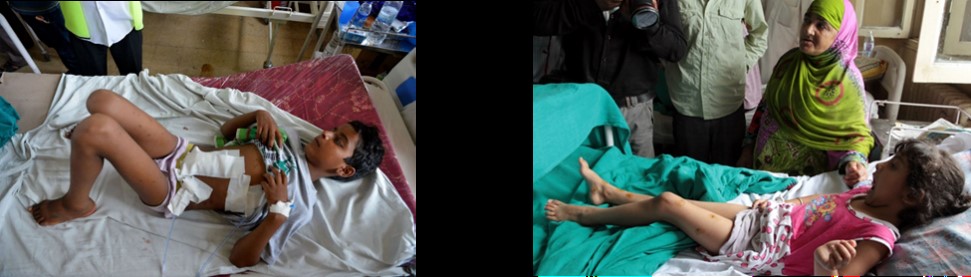
When Swaraj said, “The germ of evil has grown into a hydra-headed monster, backed by technological sophistication…” I wonder if she meant the “non-lethal" pellet cartridges being used by the Indian army in Indian Occupied Kashmir since 2010 and which we can see here embedded in the skull of twenty years old Amir Begh.

              Swaraj said, “In our midst, there are nations that still speak the language of terrorism, that nurture it, peddle it, and export it. To shelter terrorists has become their calling card. We must identify these nations and hold them to account”. And I absolutely agree!

India’s many Gods and their stories might hold a certain charm for some, but for Indian people to have as many versions of facts, and for the Indian government to have as many yardsticks to measure them, is far from being charming… it is self-serving, bigoted, offensive, morally corrupt and by all means a crime against humanity.


FBI’s defines terrorism as:
The unlawful use of force or violence against a
person or property to intimidate or coerce a government,
the civilian population, or any segment thereof, in furtherance
of political or social objective.

Assuming that the Indians signing HR6096 by default agree with FBI’s definition of terrorism, please join me in taking stock of the past four months of Kashmir.
  • ·         On July 19, 2016, Harinder Baveja of The Hindustan Times wrote, “The ground from under Kashmir’s feet had slipped last year when the tech-savvy new-age militants far outnumbered what security forces call ‘’foreign terrorists’’ or those who come from Pakistan”.
  • ·         Neville Lazarus of Sky News reported on July 19th “The Central Reserve Police Force (CRPF) fired around 3,765 cartridges, each containing 450 metallic balls, between 9 July and 11 August - amounting to the discharge of almost 1.7 million pellets in total…. Pellet guns have injured more than 400 people in the valley, with many … suffering irreversible damage to their eyes”.
  • ·         By July 21, 2016, children as young as five years old Zohra Zahoor and twelve years old Junaid had fallen victim to the indiscriminate use of ‘NON_LETHAL’ pellet cartridges by Indian security forces in their crackdown against the natives.


  •  ·         On 18th August, while taking responsibility for the murder of Shabir Mangoo,who was             beaten to death by a group of Indian Army personnel who raided his house in the night,  Northern Army Commander Lt. Gen. D S Hooda admitted to unsanctioned rage based operations carried out by the soldiers at will. (here) & (here)
  • ·         On 16th September, a senior member of the Jammu Kashmir Coalition of Civil Society (JKCCS), Khurram Parvez was turned away from Delhi airport on Wednesday evening after trying to board a flight to Switzerland, where he planned to submit a “civil society stakeholder’s report” to the UN human rights council.


And this is just four months in 2016. A miniscule detail from the past sixty-nine years of struggle by Kashmiris demanding their legitimate right of plebiscite. Referring once again to FBI’s definition of terrorism (on which HR6096 is based) one must ask if this is not 
·         the unlawful use of force or violence
·         against a person or property
·         to intimidate or coerce the civilian population, (and) segment thereof
·         in furtherance of political or social objective
            I say it is!

Swaraj poignantly said,
“Therefore, if we want to defeat terrorism, there is only one way - that we unite across our differences, add steel to our resolve and inject urgency in our response.  We need to forget our prejudices and join hands together to script an effective strategy against terror. This is not an impossible task provided we have the will. We can do it; we must do it. Otherwise our future generations will forever hold us to account. And if any nation refuses to join this global strategy, then we must isolate it.

I say, we must! Though I’m not sure that Sushma Swaraj, the government she represents and my FaceBook friend agree in all given context.  
In the past seven years Pakistan has lost 35,932 lives to terrorism, which is more than five times of India's 7,026. (source). India has domestic terrorism in the form of Kashmir, Assam, Nagalim, Tripura and Khalistan movements. Pakistan has... well... if you must... Baluchistan. Even then, the numbers are too skewed to justify the Indian stance or HR6096. 

PS. for comparative details on Baluchistan please feel free to Google it or ask the scribe to Google it for you, It'll be my pleasure!


Thursday, May 5, 2016

Corporatizing Pakistan


[Corporatizing May Day was written for The News Daily for its May Day issue but was refused publication. It first appeared on Socialist Pakistan News (SPN) on the 4th of May. It is being posted here with the permission of the authors, without edits and alterations]. 


           By Afiya S Zia & S Akbar Zaidi
          

        For more than a century, 1stMay has been celebrated universally, as International Workers' Day, or simply as May Day. It has been an event where trade unionists, progressives, radicals and Left political parties and movements have given a call to the workers of the world to unite, to rise up against exploitation at the workplace, against imperialism, in defence of the rights for the working classes, for equality for women, and for the disenfranchised.

         Even after the collapse of socialism and in this neoliberal imperialist order, the symbolic relevance cannot be lost on an older generation of trade unionists, radicals, feminists and progressives. Many are now retired from political praxis, yet, presumably aware that May Day still has significant political and ideological connotations.

          It is on May Day this year, perhaps disregarding its significance, that a number of Pakistani icons of the Left, of radical feminism, and of the trade union movement, have agreed to participate in an event organised and sponsored by the British Council entitled, 'Women of the World’ (WOW) at the Beach Luxury Hotel in Karachi.  WOW has been promoted as a festival which will be informed by the “keynote of British values of equality, diversity and inclusivity (EDI)” -- even such moral and ethical values now have an acronym. Co-organisers include, the Pakistan Institute of Labour Education and Research and the Research Collective. Some renowned Left and feminist-supportive enterprises such as, Standard Chartered Bank, Engro and L'Oreal, are sponsoring the event.

         Some of the speakers are well-known socialist feminists who have historically chastised women’s rights NGOs regarding the sources of their funding. Other, younger, self-acclaimed anti-imperialist, feminist, speakers (who politic online against the running dogs of neo-liberalism and capitalism) have been forging their careers by protesting imperialism as the root cause of all evils – from FATA to Balochistan. Forget Women of the World, there seem to be no Pukhtoon or Baloch woman listed at this ‘diverse’ event. Presumably, these provinces have been decolonised while we weren’t looking.

            The latest competitive trend against the NGO-isation of progressive politics in Pakistan is that of its culturalisation. The fatigue from donor-funded NGO seminars has allowed for a new invention by donor agencies, in partnership with the private sector. This is, the fashion of 'festivals for a cause'. The relentless marketing of culture as politics is not just a-typically postmodernist, it has meant that acclaimed pop literature and cultural festivals are being sold and consumed as worthy and alternative sites for political causes. Want to be an activist and entertained at the same time? Buy your tickets here…food, zumba and spin classes available between rape victim testimonies and something called, ‘speed-mentoring’. Corporatized fast food, start-a-business, just do it, sponsor and co-opt a revolution...

            Increasingly, at events about women's rights in Pakistan, we have more men speaking to and on behalf of women. Clearly, we are so post-feminist that women don’t even need to represent themselves anymore. It is a wonder that Mukhtara Mai is being asked to give her testimony at Beach Luxury at all, when presumably, any male lawyer could have done so on her behalf.
We are also apparently, post-capitalist and May Day is not worthy of recalling the fact that labour classes in Pakistan have been under vicious attacks over just the past few months. The renewed uprising of Okara peasants, the Coolie protest against contractual exploitation and the targeted killing of polio workers are seemingly not opprobrious to ‘keynote British values’, one supposes. But are they not socialist nor feminist causes? What does it mean to have a session on conflict exceptionalising ‘Karachi as a Woman’?  

            There is a tendency to justify discomforting facts. We hear the usual mealy-mouthed excuses that it doesn’t matter what the venue of the event, nor how many men speaking, nor who is funding the initiative. The plea that young people come to such events is border-line orientalist when you consider that young people are everywhere - from PTI dharnas, to the beaches, to the market places, and upmarket chai dhabas. Just the presence of the young is insufficient to raise consciousness and concern about public issues. Using such platforms, always well-funded, has helped depoliticise the youth, made them consumers of fast moving goods, dependent on donors to organise their little get-togethers. While the British Council celebrates the women of the world on the 1st of May, the absence of positioning or mentioning May Day and its relevance - not just for the working men, but also for the struggling women workers of Pakistan -and to which so many former progressives have bought in, is a reflection of how progressive politics in Pakistan has changed.

           These justifications of donor funded public causes, and perhaps even the revolution itself, wouldn’t be so absurd if the participating activists and organisations hadn’t made careers out of the alternative identity badges they wear and, if they didn’t despair with such arrogance over the fledgling left and compromised liberals and apolitical privileged elite. The slippage between the typed words of fury on Facebook, crude sloganeering over Twitter, and real-time activity is definitive of the progressive politics that they subscribe to. There is no longer any need to prioritise the workers of the world, or to participate collectively for the rights of the oppressed– an individual thesis, film or Tweet about injustice ought to do its job adequately.

            Over the last few months, a group of progressive academics and scholars have initiated an attempt to start a dialogue amongst themselves as well as amongst a wider constituency. It includes Leftists, feminists and others concerned about progressive causes and politics. The focus is to revive the nature of debate in the public sphere and re-evaluate the trivialisation of key issues ranging from secularisation, militarisation, democratisation, NGOs and social change. At a time when several former comrades participate in corporate-sponsored events reducing the significance of May Day, a new generation of young activists is emerging, participating in political causes, showing solidarity with the Okara peasants, with women workers and by strengthening newly-rejuvenated Left political parties. They are finally questioning the depoliticisation of twenty years of the NGOisation of Pakistan and the finer rules of engagement with the state, the national question, politics of the domestic and how to revive the Left. All this political activity is just that: political, unfunded and unsponsored by donors or the corporate set, out-of-pocket contributions by the cadre themselves. This is a miniscule attempt in starting to talk about, and within, the Left and amongst progressives of varying shades.

            The comrades at corporate events tend to defend their interventions as purposeful. But in fact, the history of NGOs is also littered with similar good intentions, which simply ended up diluting radical politics and making paid activism a virtue. It is worse to dance at both weddings and pretend there is no conflict of interest. The corporatisation of politics is simply a new dimension of depoliticisation and to pretend that it is a level playing field where awareness is being raised and politics being spread is to dupe oneself and in this case, an injustice to the cause of workers and women itself.


Afiya S. Zia is a feminist research-scholar and activist based in Karachi. She is the author of ‘Sex Crime in the Islamic Context’, 1994 (ASR, Lahore) and a very vocal critic of the partnership between Pakistani Secular Feminist Activists and International Development Organisations. Afiya has edited a series of books, authored several essays in recent publications and contributed to scholarly journals. Her research interests include the interplay of Islam and secularism in Muslim contexts, violence against women and the women health workers’ movement in Pakistan. 


S Akbar Zaidi is Professor of Middle Eastern, South Asian and African Studies and of International and Public Affairs. His research focuses on development, governance, and political economy in South Asia.

Zaidi has taught economics at the University of Karachi. He was a visiting scholar at the University of Oxford, a research fellow at the University of Pennsylvania’s Institute for the Advanced Study of India in New Delhi and a visiting professor at Columbia. Over the years Zaidi has authored books and innumerable articles for newspapers and journals. 


Wednesday, October 14, 2015

دو سال پرانا ایک خط


Sep 11, 2013 

عثمان بھائی آداب،

email address  دینے کا بہت بہت شکریہ. گو مجھے اندیشہ ہے کہ میرے ساتھ  مذھب اور پیغمبر کے موضوع پر گفتگو لا حاصل ہو گی. ذاتی طور پر میں اس بحث سے کم و بیش بیس سال قبل آزاد ہو چکی ہوں. بیس سال قبل میں نے پہلی مرتبہ قران کا ترجمہ پڑھا. مشکل کام ہے کیونکہ ربط نہیں ہے. آج بھی حیرت زدہ ہوں کہ سورۂ النساء کے بعد بھی کیوں پڑھتی چلی گئی؟  پھر تفسیر و تفہیم پر مغز ماری کی اور اللہ بھلا کرے مولانا مودودی کا کہ سورۂ البقرۂ کی تفہیم پڑھنے کے بعد مزید سمجھنے کی ضرورت نہ رہی، یعنی یہ امر مکمل واضح ہو گیا کہ یہ کتاب اور اس سے پہلے آنے والی کتب، (جنکا تعلق ایک مخصوص شجرہ نسل سے ہے) تمام تر کا اہتمام سیاسی و سماجی قوت کے استحکام کی بنیادوں پر کیا گیا. ترجمہ اور تفسیر و تفہیم سے قلب و ذہن پر جو بوجھ پڑا اسے جھٹکنے کے لیۓ ضروری تھا کہ معروضی حقائق کی کھوج کی جاۓ سو تاریخ پڑھنی شروع کی. اور اب حالت یہ ہے کہ روحانیت کے حوالے سے مذاھب اور پیغمبران مشترکہ طور پر بےمعنی اور لایعنی ہو چکے ہیں.

 علم میں قدرت نے بہت تکلیف رکھی ہے. دل بار بار کڑھتا ہے. لوگوں کی لاعلمی پہ اور اسکی بدولت بےبسی پہ. پہلے غصہ کرتی تھی لیکن اب نہیں کرتی. مذھب کے پیروکاروں میں ننانوے فیصد وہ ہیں جو پیدائشی مسلمان، ہندو، یہودی اور عیسائی ہیں. سوچتی ہوں اگر یہ سب ان مذاھب کے ساتھ جڑی کتابیں پڑھ کر مذھب چنتے تو نہ مسلمان ہوتے، نہ یہودی اور نہ عیسائی. خاص کر عیسایت تو کب کی طاق پہ دھری جا چکی ہوتی. اور ہندومت بھی. اسلام اور یہودیت کا مسئلہ مختلف ہے کیونکہ ان پر آج بھی مذہبی سیاستدانوں کا راج ہے.

سو یہ ہے صورتحال. تاریخ چاہے ایک طرف سے کھولیں یا دوسری طرف سے، مذھب، پیغمبر اور الہامی کتب کا پول بہت سادگی سے اور پورا کا پورا کھلتا ہے.

میں تو کہتی ہوں دفع کریں عثمان بھائی، اس بحث میں کچھ نہیں رکھا
پچاس سال عمر ہونے کو آئی ہے. اب تو بس یہ افسوس رہ گیا ہے کہ انسانی ذہن کی انتہائی خوبصورت ایجاد یعنی خدا کے  تصور کو اپنی اپنی دکان چمکانے کے لئے کس کس طرح چیرا پھاڑا جا رہا ہے. وہ ایک خیال جو قبل از تاریخ اور قبل از تھذیب، غاروں میں رہنے والے انسان کی ذہنی نفاست کی پہلی دلیل تھا اور اسکے اشرف المخلوقات ہونے کا ثبوت تھا، اب اسی انسان سے چھن چکا ہے اور اس سے جڑی تمام تر تجریدیت حلال، حرام، گناہ، ثواب، جنت، جہنم وغیرہ کا روپ دھار چکی ہے. اب تو لازم ہے کہ اس خیال سے ہم آہنگی کے لئے پہلے کسی پیغمبر اور اسکے ایجاد کردہ مذھب پر ایمان لایا جاۓ اور اپنی شناخت کے حوالوں میں اسکا حلفیہ بیان ہو.  پتہ نہیں پڑہے لکھے مسلمان یہ سوال کب اٹھائیں گے کہ عثمان نے علی کا قران کیوں قبول نہیں کیا؟ زید ابن ثابت کی یاداشت سے حفصہ، ام سلمیٰ اور عائشہ کے ہونٹوں تک آتے آتے بات کیا سے کیا ہوئی اور پھر  تین سو سال پر محیط اعراب، تشکیل و تکمیل کے عمل کی دوران کتنے الفاظ  "اُمّہ" سے "اِمّہ" ہو کر رہ گئے؟ 
بیگم کی خدمت میں سلام
ناچیز
صالحہ.